Top 3 Mistakes Small Businesses Make with Social Media Growth — And The One Strategy To Fix Them
Small businesses often turn to social media hoping for quick sales or instant leads. But the truth is, most companies—especially those built by Gen X owners—struggle to get real traction online. Not because they lack skill or drive, but because the marketing landscape has transformed faster than anyone expected.

Gen X is a one‑of‑a‑kind generation. We watched the digital age appear in real time. We adapted to every major shift—computers, the internet, smartphones, social media. Adaptability is our superpower. But that same strength can also slow us down. We built successful businesses using traditional media, and because those methods worked, we’re naturally cautious about abandoning them.

But the real writing on the wall didn’t come from Facebook or Google. It came from AI.
“AI is one of the most important things humanity is working on. It is more profound than fire or electricity.”-Sundar Pichai (Google CEO)
For years, people have been preaching about digital marketing. And while it mattered, many successful business owners—especially late adopters—could still grow without fully embracing it. But the AI explosion changed the rules. AI isn’t just another marketing channel; it’s a fundamental shift in how businesses operate, communicate, and compete.
I was fortunate to be an early adopter of AI, using it to build businesses long before it became mainstream. And what I’ve seen over the last few years is clear: AI is forcing the hand of late adopters in a way that digital marketing alone never did.
This is the new terrain. And the companies that adapt now will own the next decade.
“AI is the single most powerful force of our time.”-Jensen Huang (NVIDIA CEO)
Below are the top mistakes small businesses make with social media—and the strategic approach we’re implementing to help companies thrive in this AI‑accelerated digital landscape.
Mistake 1: Relying Too Much on Traditional Advertising Without a Digital Strategy for Social Media Growth
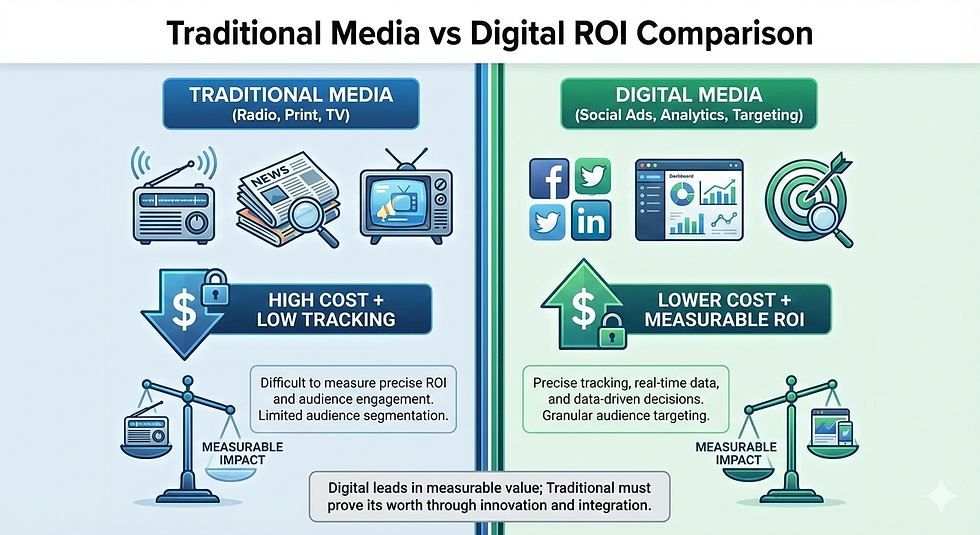
Many small businesses still lean heavily on radio, print, and TV because those channels built their early success. And yes—traditional media can still work. I’ve seen direct mail campaigns perform extremely well for regional service businesses.
But here’s the key: Traditional media must earn its place.
If a campaign is winning—and we can prove it’s winning—it stays. If we can’t track it, measure it, or verify that it’s generating real leads, then it becomes a liability.
That’s where digital marketing steps in.
Digital gives us:
Precise targeting
Real‑time data
Clear cost‑per‑lead
The ability to scale what works and cut what doesn’t
This is why our strategy replaces most traditional media—not because it’s outdated, but because digital gives us clarity, control, and measurable ROI. Traditional channels are welcome to stay, but only if they can prove their value.
Mistake 2: Posting Randomly Without a Purpose or Plan
A lot of businesses post only when they remember, or they share content that doesn’t connect with their audience. This leads to low engagement and wasted effort.
The issue isn’t the business—it’s the lack of structure.
Our strategy fixes this by implementing a complete content system built around:
A consistent posting calendar
Helpful, value‑driven content (tips, FAQs, seasonal reminders)
Customer stories and testimonials
Clear, compelling promotions
This approach keeps the brand visible, builds trust, and positions the business as the go‑to expert in the community.
Mistake 3: Ignoring Analytics and Customer Feedback
Many small businesses never look at their analytics. They don’t know which posts perform best, which ads generate leads, or what customers are saying online.
But data is the compass of digital marketing. Without it, you’re flying blind.
Our strategy includes:
Tracking engagement, reach, and lead generation
Reviewing ad performance and adjusting campaigns
Monitoring comments and messages to understand customer needs
This allows us to refine the strategy continuously—so every month becomes more effective than the last.
How We’re Positioning This HVAC Company for Digital Growth
One HVAC company I’m working with has a strong reputation and a loyal customer base—built the Gen X way, through hard work, quality service, and traditional advertising. But like many successful businesses, they hadn’t yet made the full transition into digital marketing.
That’s where our PLSS (Proprietary Lead Stability System) strategy comes in.
We’re building a complete digital ecosystem designed to:
Set clear goals for lead generation and brand growth
Establish a consistent, strategic content plan
Run targeted social media ads that reach the right homeowners
Track performance and optimize based on real data
Replace traditional media that can’t prove ROI, while keeping any campaigns that are still performing
Integrate AI‑powered tools to accelerate content, insights, and customer engagement

This isn’t about overnight results—it’s about building a long‑term digital presence that strengthens the business, reduces reliance on expensive guesswork, and positions them for the future.
The Next Step for Small Business Owners
If your business feels stuck or unsure about social media, you’re not alone. Many Gen X‑led companies are in the same place—not because they can’t adapt, but because they’ve been busy running successful businesses the way they always have.
But the AI era is here. And it’s moving fast.
The companies that adapt now will own the next decade. With the right strategy, social media becomes more than a marketing tool—it becomes a growth engine powered by data, clarity, and AI‑driven efficiency.


Comments